
Quick answer
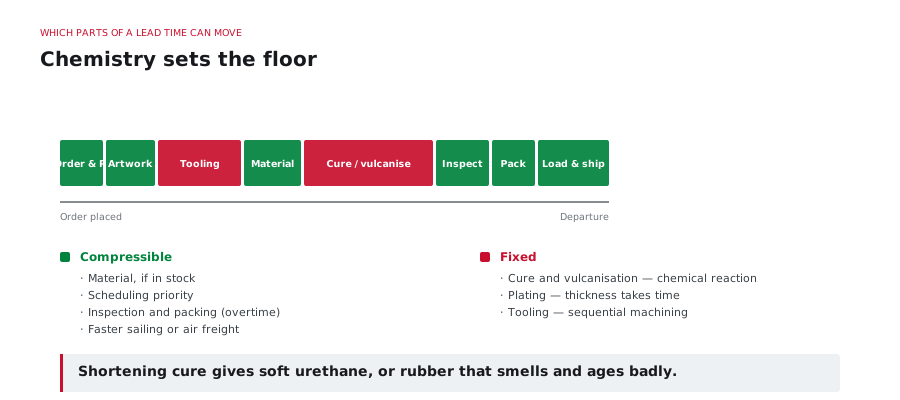
Can be compressed: material preparation if stock is available, scheduling priority, inspection and packing with additional labour, and shipping by faster service. Cannot be compressed: curing and vulcanisation, which are chemical reactions; plating time, since coating thickness takes time to build; and tooling, which has fixed machining steps. When a buyer asks for a rush, the useful response is to ask their deadline first, then explain which portion is fixed so they can decide between a later date and a changed specification.
A distributor with a gym opening on a fixed date asks whether production can be accelerated. Saying yes without qualification is how delivery promises get broken; saying no without explanation loses the order. The accurate answer is that a lead time has movable and immovable parts.
The stages of an order
- Order and proforma invoice confirmed
- Artwork, colour and logo approved
- Tooling, if a new logo is involved
- Material preparation
- Production: moulding, vulcanisation or curing, plating
- Inspection
- Packing
- Container loading
- Customs and departure
Production is the longest stage, and within it the chemistry is the part that cannot be hurried.
What can move
| Stage | How it compresses | Cost |
|---|---|---|
| Material preparation | Start immediately if stock is on hand | None, if available |
| Scheduling | Move the order forward in the queue | Delays other orders |
| Inspection and packing | Additional shifts or labour | Overtime |
| Shipping | Faster sailing, or air freight | Significantly higher freight |
What cannot
Curing and vulcanisation
This is a chemical reaction. After urethane is poured, the two components have to react and cross-link. Heat accelerates it, but too much heat causes bubbles, cracking and reduced performance. Vulcanisation is the same — sulphur cross-links between the rubber molecules take time to form.
Cutting this short produces predictable damage:
- Urethane cured incompletely stays soft, wears faster and deforms in service
- Rubber vulcanised incompletely has poor elasticity, a stronger odour, and ages faster
Cure time is not a target to be approximated. It has to be met.
Plating
Coating thickness builds over time in the bath. Reducing the time reduces the thickness, and thin plating is the first cause of corrosion appearing from beneath the surface.
Tooling
Tool making has sequential machining steps that cannot be run in parallel. If a new moulded logo is required, tooling and trial samples add weeks, and a buyer working from a previous order's lead time will underestimate the schedule.
The right first question
When a customer asks for a rush, I ask when they actually need it. If there is room I will schedule it. If there is not, I tell them which part cannot move, so they can decide whether to accept a later date or change the specification.
Changing specification is often the overlooked option. A buyer who needs goods quickly can frequently have them by moving to a line already scheduled, or by dropping a custom colour that requires a dedicated batch.
Seasonal pressure
Capacity is not constant through the year. Early in the year customers restock for the spring season; mid-year they prepare for autumn and year-end promotions. The tightest period is around Chinese New Year, when factories close and staff travel home.
The practical advice is simple: if a delivery date is known, place the order early. Orders arriving just before the holiday period often cannot be scheduled at all.
When a buyer changes the specification mid-production
| Change | Impact |
|---|---|
| Colour | Minor — but pieces already produced may be scrapped |
| Logo, after tooling | Major — the tool must be modified |
| Dimensions | Major — tooling modified or remade |
| Packaging | Minor |
| Quantity | Depends — a large increase requires new material |
Anything requiring the tool to change effectively restarts the schedule, because trial, approval and production all run again.
One case from our own experience: a customer approved a trial sample, production ran to the halfway point, and then asked to change the logo typeface. The completed pieces were scrapped, the tool was modified, and delivery moved by close to a month.
Since then we ask one additional question at sample approval: are you certain about this logo? Changes after this point are expensive. Buyers who understand the cost check more carefully.
Three questions before promising a date
Our technical manager requires these before any delivery commitment is given to a customer:
- How tight is the schedule for this product right now?
- Is the material in stock?
- Does this order involve new or modified tooling?
What I do not want is a salesperson promising a date without asking. The promise gets made, it cannot be met, the customer is angry and we are the ones holding it.
A date given after these three questions is worth something. A date given to close a call is not.
Related reading: how expectations around documentation and consistency have shifted.
Written with our technical manager, who has spent twenty years on the floor of a free-weight plant. Figures that would require independent laboratory testing are deliberately not quoted here.
Frequently asked
Can gym equipment production be rushed?
Partly. Material preparation, scheduling priority, inspection, packing and shipping can all be accelerated. Curing, vulcanisation, plating and tooling cannot, because they are chemical or sequential processes.
Why can't curing time be shortened?
It is a chemical reaction. Urethane components must cross-link and rubber requires sulphur bonds to form. Heat accelerates both, but excessive heat causes bubbles, cracking and reduced performance.
What happens if rubber is under-vulcanised?
It has poorer elasticity, a stronger odour because volatiles remain in the product, and it ages faster. Under-cured urethane stays soft, wears quickly and deforms in service.
How much does new tooling add to a lead time?
Several weeks, covering tool making, trial samples and customer approval before production can start. A buyer using a previous order's lead time will underestimate a first order with a new moulded logo.
What should a salesperson confirm before promising a delivery date?
How tight the schedule is for that product, whether material is in stock, and whether tooling is new or modified. A date given without these three answers is a guess.

Written by the people who quote, tool and inspect the product at our own plant. Questions: sales@ironhue.com
Request a quotation
Send the list. Get price, lead time and container loading in one working day.
Item list, quantities and destination port are enough to start. Logo artwork and colour references can follow once the price is agreed.
- Emailsales@ironhue.com
- Phone / WhatsApp / WeChat+86 138 6042 3022
- OfficeIronhue Limited
Room 1203, No.5 Jinzhong Road, Huli District, Xiamen, China