
Quick answer
Three shifts define the last two decades. Materials: urethane and TPU moved from premium-only to mainstream commercial, while chrome retreated to boutique and residential use. Process: moulded logos replaced printing, and batch weighing replaced sampling. Buyers: the decisive change — where customers once accepted what they were told, they now research, compare and ask technical questions. A supplier who cannot explain why no longer gets the benefit of the doubt.
Descriptions of industry change usually focus on products. Speaking to someone who has been on the same factory floor for twenty years, the more interesting change is on the other side of the transaction.
Then
When I started, this business was crude. Few product types, mostly chrome and vinyl. Rubber coating was just becoming common and urethane was rare. Customer expectations were low — if it worked, it was acceptable.
What changed in materials
| Twenty years ago | Now | |
|---|---|---|
| Commercial default | Chrome, vinyl, early rubber | Rubber, with urethane and TPU widespread |
| Urethane | Premium only, rarely seen | Specified by 24/7 chains and studios as standard |
| Rubber compound | Strong odour | Improved, though not odourless |
| Chrome | Mass market, including home use | Boutique, hotel and residential only |
| Colour | Black, with limited options | Full Pantone matching expected |
Chrome's retreat is the clearest single reversal. It was the mainstream home-fitness product and is now a specialist one, because buyers came to dislike the corrosion risk and the cold feel in the hand. Urethane moved the opposite way.
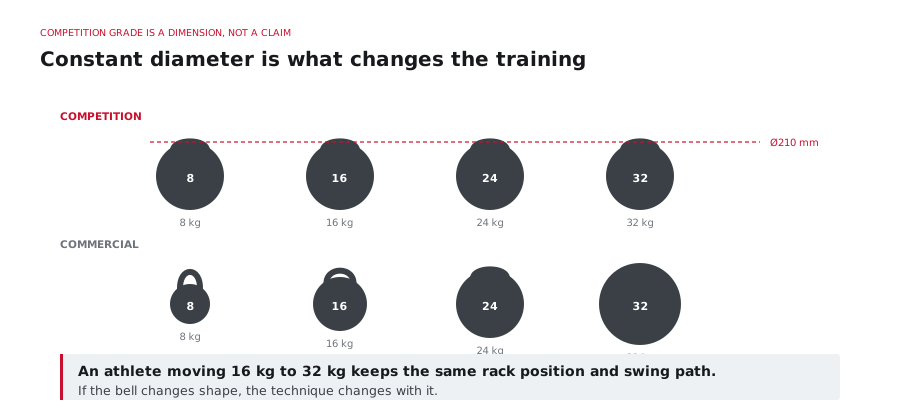
Competition kettlebells followed a similar path: once bought almost exclusively by national teams, now widely purchased by commercial gyms because the constant-diameter design signals a serious facility.
What changed in process
- Moulded logos replaced printing. What was a premium option is now the expectation for private label, described in this article.
- Automation increased. Weighing, mixing and forming are now machine-assisted, which improved consistency more than it reduced headcount.
- Inspection tightened. Sampling gave way to batch weighing, because buyers began specifying it.
What changed in buyers
This is the change our technical manager considers decisive.
The biggest difference is that customers understand the product now. They used to accept what you told them. Now they search, they compare, they ask specific technical questions. If you cannot explain it, they do not believe you.
Three shifts in what buyers ask about:
| Then | Now |
|---|---|
| Price — cheapest wins | Value — higher is acceptable if the reason is explained |
| Product — does it work | Documentation — REACH, PAHs, Prop 65, management systems |
| Speed — how fast | Reliability — is the date and the quality consistent |
The documentation column deserves particular note. Twenty years ago test reports were rarely requested. Today they are routine in European and North American procurement, and increasingly a condition of entry rather than a differentiator.
What this means for a supplier
Making the product well is no longer enough. You have to be able to explain it. Explain why it is made this way, and the customer believes you.
That is a substantial change in what a manufacturer has to be good at. Twenty years ago the capability was production. Now it is production plus the ability to answer a technical question without deflecting — which is much of the reason this blog exists.
Where it is heading
Three directions, in our technical manager's view:
- Material upgrading continues. Urethane and TPU keep displacing rubber and chrome, driven by expectations around odour, floor marking and service life.
- Customisation grows. Own colours, own logos, own packaging. Standard product becomes harder to sell and private label more important.
- Compliance tightens. Test reports, certification and environmental requirements become prerequisites for large accounts rather than advantages.
The implication for a factory is that production capability alone is not a defensible position. Quality control, documentation and cost control have to come with it.
Advice for anyone entering the trade
Asked what a newcomer should learn first, the answer was immediate: materials.
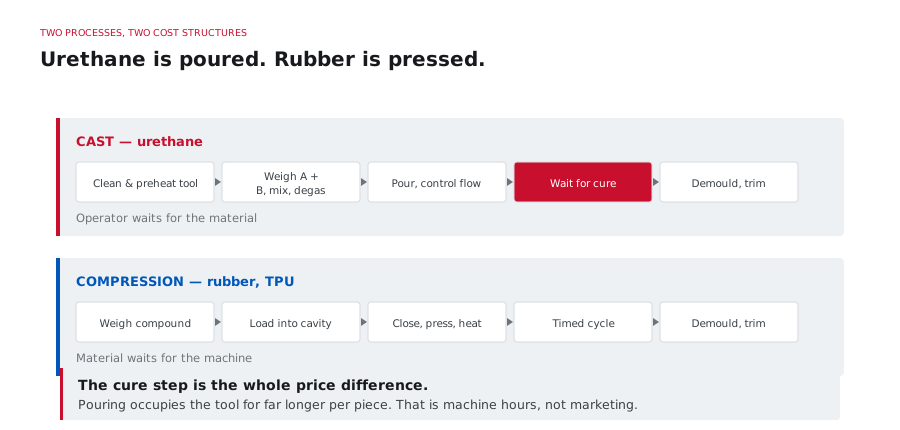
In this business materials decide everything. Urethane, TPU, rubber, vinyl, chrome — the properties, the process, the cost, where each belongs. Once you understand materials you can explain to a customer why something is expensive, why something is cheap, and which one suits them.
Then process, so that when something goes wrong you can locate it. And last, communication — because technical knowledge that cannot be explained convinces nobody.
Written with our technical manager, who has spent twenty years on the floor of a free-weight plant. Figures that would require independent laboratory testing are deliberately not quoted here.
Frequently asked
How has free-weight manufacturing changed in twenty years?
Materials moved from chrome and vinyl toward rubber, urethane and TPU. Moulded logos replaced printing, batch weighing replaced sampling, and buyers became far better informed and more demanding about documentation.
Why did chrome dumbbells lose popularity?
Buyers came to dislike the corrosion risk and the cold feel in the hand. Chrome retreated from the mass home-fitness market to boutique studios, hotels and residential gyms where appearance leads.
What do buyers ask about now that they did not before?
Documentation above all: REACH, PAHs, Prop 65 and management system certification. They also weigh value over headline price, and consistency over raw speed.
Are competition kettlebells only for athletes now?
No. They were once bought almost exclusively by national teams and are now widely purchased by commercial gyms, because the constant-diameter design signals a serious facility.
What should someone entering this industry learn first?
Materials. Their properties, processing, cost and suitable applications. Then process, so faults can be located, and then communication, because technical knowledge that cannot be explained convinces nobody.

Written by the people who quote, tool and inspect the product at our own plant. Questions: sales@ironhue.com
Request a quotation
Send the list. Get price, lead time and container loading in one working day.
Item list, quantities and destination port are enough to start. Logo artwork and colour references can follow once the price is agreed.
- Emailsales@ironhue.com
- Phone / WhatsApp / WeChat+86 138 6042 3022
- OfficeIronhue Limited
Room 1203, No.5 Jinzhong Road, Huli District, Xiamen, China