
Quick answer
Six specifications decide whether a bar suits a buyer: shaft diameter (28 mm men's, 25 mm women's), loadable sleeve length (how much can go on), knurl grade, centre knurl (wanted for squats, disliked for bench), marking rings (IPF and IWF sit at different positions) and spin mechanism (bearings or bushings). A bar quoted without these is a weight and a length, not a specification.
Most free-weight lines are defined by two or three numbers. A barbell needs six before a buyer can tell whether it fits their floor, and omitting them is the most common reason a barbell quotation has to be redone.
1. Shaft diameter
The part the lifter grips. Two standards dominate:
| Men's | Women's | |
|---|---|---|
| Shaft diameter | 28 mm | 25 mm |
| Bar weight | 20 kg | 15 kg |
| Overall length | 2200 mm | 2010 mm |
| Loadable sleeve length | 415 mm | 320 mm |
Thicker shafts appear in powerlifting, where a stiffer bar is preferred. Thinner shafts suit smaller hands and are standard in women's weightlifting. A commercial floor usually needs both.
2. Loadable sleeve length
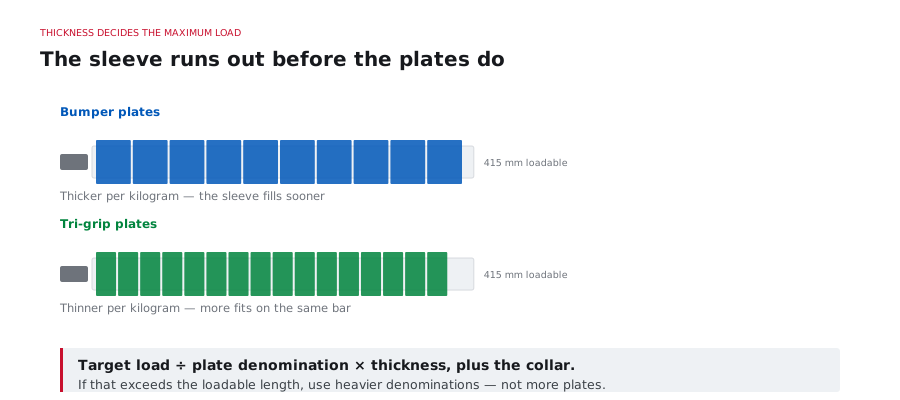
How much of the sleeve is actually available for plates, after the collar shoulder. This decides the maximum load, and it is the specification buyers most often discover only after delivery.
Work it backwards: if a facility needs to load 200 kg, count the plate thickness required and check it fits, remembering that a collar occupies space too. Bumper plates are considerably thicker than tri-grip plates for the same weight, so a bumper-equipped platform runs out of sleeve sooner.
3. Knurl grade
The diamond pattern cut into the shaft. Usually offered as light, medium or aggressive.
- Light — general commercial floors, mixed membership, minimal complaints
- Medium — the default for most facilities
- Aggressive — powerlifting and heavy pulling, where grip security outweighs comfort
A general-purpose gym choosing aggressive knurling will hear about it from members. A powerlifting gym choosing light knurling will hear about it too.
4. Centre knurl
A knurled band in the middle of the shaft. It helps the bar stay put on the back during squats and is disliked by anyone benching, because it catches the shirt and the chest.
Rules of thumb: weightlifting and powerlifting bars usually have it, general-purpose commercial bars usually do not, and if a facility can carry two specifications this is a sensible place to split them.
5. Marking rings
The rings machined into the knurl that show grip width. IPF (powerlifting) and IWF (weightlifting) place them differently, and some bars carry both.
For a commercial gym the choice is largely cosmetic. For a facility hosting sanctioned events it is not: the wrong rings make the bar unusable for competition.
6. Spin mechanism
How the sleeve rotates around the shaft. Two approaches:
| Bearings | Bushings | |
|---|---|---|
| Spin | Faster, free | Slower, more damped |
| Suits | Olympic lifting, where the bar turns fast in the hand | Powerlifting and general commercial use |
| Cost | Higher | Lower |
Faster is not universally better. A powerlifter does not want a bar that spins freely, and a general commercial floor rarely needs it. Buy bearings where the lifting demands them.
We publish the construction type of each bar but not bearing counts, load ratings or tensile figures, because those are performance claims we do not hold independent test data for. Where those numbers matter, commission testing on samples.
The quotation checklist
Before quoting barbells, confirm:
- Men's, women's, or both
- Required maximum load, and whether it will be loaded with bumpers or tri-grip plates
- Knurl grade
- Centre knurl, yes or no
- Marking rings: IPF, IWF, both, or unmarked
- Bearings or bushings
- Shaft finish
- Whether collars are included
Eight lines in an email, and it turns a quotation that would need three rounds into one that needs one.
Related reading: how plate thickness limits what fits on the sleeve.
Frequently asked
What is the difference between a 28 mm and 25 mm barbell?
28 mm is the men's standard, on a 20 kg bar 2200 mm long. 25 mm is the women's standard, on a 15 kg bar 2010 mm long. The thinner shaft suits smaller hands and is standard in women's weightlifting.
What is loadable sleeve length and why does it matter?
The usable length of the sleeve available for plates after the collar shoulder. It sets the maximum load. Bumper plates are thicker than tri-grip plates for the same weight, so a bumper-equipped bar runs out of sleeve sooner.
Should a commercial gym barbell have a centre knurl?
Usually not. A centre knurl helps the bar grip the back during squats but catches the shirt and chest when benching. Weightlifting and powerlifting bars normally have it; general-purpose commercial bars normally do not.
Are bearings better than bushings in a barbell?
Not universally. Bearings give faster, freer spin suited to Olympic lifting. Powerlifters and general commercial floors often prefer the more damped rotation of bushings, at lower cost.
What is the difference between IPF and IWF marking rings?
They sit at different positions on the shaft, matching the grip rules of powerlifting and weightlifting respectively. For a commercial gym the difference is cosmetic; for a venue hosting sanctioned events the wrong rings make the bar unusable.

Written by the people who quote, tool and inspect the product at our own plant. Questions: sales@ironhue.com
Request a quotation
Send the list. Get price, lead time and container loading in one working day.
Item list, quantities and destination port are enough to start. Logo artwork and colour references can follow once the price is agreed.
- Emailsales@ironhue.com
- Phone / WhatsApp / WeChat+86 138 6042 3022
- OfficeIronhue Limited
Room 1203, No.5 Jinzhong Road, Huli District, Xiamen, China