
Quick answer
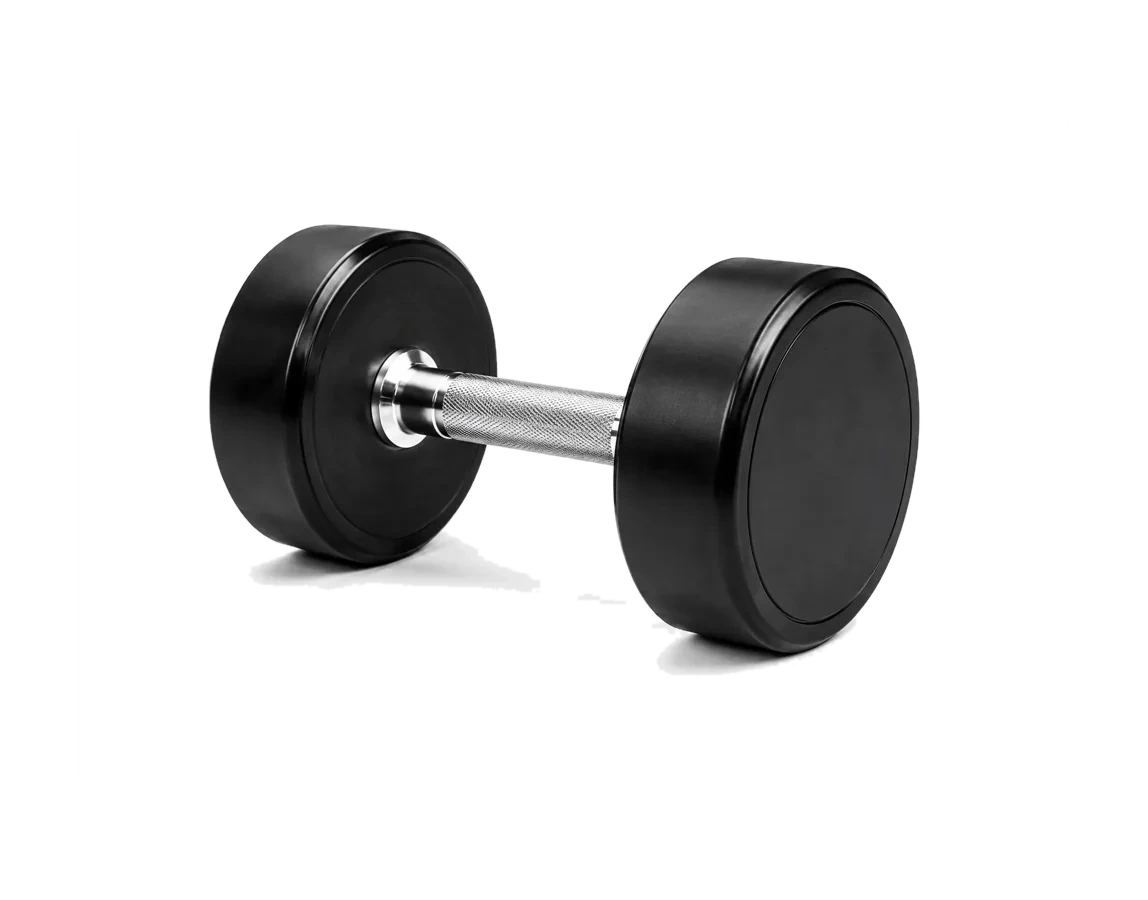
Handle diameter normally steps up with weight: ours run Ø32 mm from 2.5 to 20 kg and Ø34 mm from 22.5 to 50 kg. A heavy dumbbell on a thin handle rolls in the hand and concentrates load on the fingers. The other two handle questions worth asking are knurl depth, which trades grip against comfort, and how the head is joined to the handle — cast in one piece, threaded, or welded.
Coating gets all the attention in a dumbbell specification. The handle is what the user actually touches, and it is where complaints come from on a busy floor.
Why diameter steps up with weight
A 5 kg dumbbell is controlled easily whatever the handle. A 40 kg dumbbell is a different problem: the mass wants to rotate in the hand, and on a thin handle the grip has to fight that rotation for the whole set.
Increasing diameter on heavier pieces spreads the load across more of the palm and reduces the tendency to roll. It is the same reason a heavy suitcase has a wide handle.
| Weight band | Handle diameter |
|---|---|
| 2.5 – 20 kg | Ø32 mm |
| 22.5 – 50 kg | Ø34 mm |
Some ranges step in three or four stages rather than two. Either approach is defensible; a range with one diameter across the whole set is the one to question, because it is optimised for tooling cost rather than for use.
Knurl depth: grip against comfort
The pattern cut into the handle exists to stop slipping. Cut it deeper and it grips better and abrades the hand faster.
- Light — mixed-membership commercial floors; the fewest complaints
- Medium — the usual default
- Deep — heavy training, chalk users, performance facilities
A boutique studio with a general membership and deep knurling will hear about it. A serious strength facility with light knurling will hear about that instead. The specification follows the member, not the buyer's preference.
The joint between head and handle
Three constructions, and this is where long-term durability is decided.
| Construction | How | Notes |
|---|---|---|
| One-piece cast | Head and handle cast as a single body, then coated | No joint to fail |
| Threaded | Handle screwed into the head, usually with thread lock | Serviceable; can loosen if under-specified |
| Welded | Handle welded to the head before coating | Strong; quality depends on the weld |
For a commercial floor the question to ask is not which is best in principle, but what happens after two years of being dropped onto a rack. A one-piece casting has nothing to work loose. A threaded joint is fine when properly specified and is the one that occasionally rattles on cheap product.
What to check when a sample arrives
- Roll it on a flat surface. Hex heads should sit still. A wobble means the heads are not square to the handle.
- Grip it with a sweaty or chalked hand. Knurl that feels right dry can be useless wet.
- Twist the head against the handle. Any movement at all on a new piece is a reject.
- Compare the pair. Two dumbbells meant to be used together should feel identical, which also tests weight tolerance in the most practical way available.
What to put in a quotation request
Four lines, and the quotation comes back complete:
- Handle diameter, or a note that you want it stepped by weight band
- Handle finish — chrome, black oxide, or coated to match the heads
- Knurl depth
- Head shape — hex, round or 12-sided
Head shape is worth a line of its own: hex will not roll away on a floor, round looks traditional but needs a rack, and 12-sided is the compromise. Most commercial buyers want hex and most retail buyers do not mind. Our urethane, TPU and rubber lines all run in hex as standard.
Frequently asked
What diameter should a dumbbell handle be?
It normally steps up with weight. Ours run Ø32 mm from 2.5 to 20 kg and Ø34 mm from 22.5 to 50 kg. A single diameter across an entire range usually indicates tooling economy rather than a design decision.
Why do heavier dumbbells need thicker handles?
The mass tends to rotate in the hand. A wider handle spreads the load across more of the palm and reduces that rotation, so the grip is not fighting the weight for the whole set.
What knurl depth is right for a commercial gym?
Light to medium for mixed-membership floors, because deep knurling abrades the hands of casual users. Deep knurling suits performance facilities where grip security matters more than comfort.
How is a dumbbell head joined to the handle?
Three ways: cast as one piece, threaded into the head, or welded. A one-piece casting has no joint to work loose; threaded joints are serviceable but can rattle if under-specified.
What should I check when a dumbbell sample arrives?
Roll it to confirm the heads are square, grip it with a chalked hand, twist the head against the handle to check for movement, and compare the pair against each other.

Written by the people who quote, tool and inspect the product at our own plant. Questions: sales@ironhue.com
Request a quotation
Send the list. Get price, lead time and container loading in one working day.
Item list, quantities and destination port are enough to start. Logo artwork and colour references can follow once the price is agreed.
- Emailsales@ironhue.com
- Phone / WhatsApp / WeChat+86 138 6042 3022
- OfficeIronhue Limited
Room 1203, No.5 Jinzhong Road, Huli District, Xiamen, China