
Quick answer
When five product families run in the same plant, a mixed order ships as one container on one bill of lading with one inspection. An intermediary consolidating the same order from five factories carries five production schedules, five quality standards and five chances of a delay that holds the whole shipment. Neither model is wrong, but they carry different risk, and the buyer should know which one they are buying.
Almost every supplier will accept a mixed order. What differs is what happens behind it.
Two ways the same order gets filled
| One plant | Consolidated from several | |
|---|---|---|
| Production schedules | One | One per factory |
| Inspection | One visit covers everything | Separate visits, or inspection at the consolidation point only |
| If one line runs late | Resequenced internally | The whole container waits |
| Quality standard | One | As many as there are suppliers |
| Accountable party for a defect | The manufacturer | Depends on the contract |
| Loading | Planned against the full order | Planned against whatever arrives |
The consolidation model is legitimate and sometimes the only option — nobody makes every category. The risk is not knowing which model you have bought.
Where the difference actually shows up
Inspection
A third-party inspector visiting one plant can check dumbbells, plates, kettlebells, bars and sewn goods in a single visit at a single cost.
Under consolidation the choice is to pay for several visits, or to inspect at the consolidation warehouse where goods are already cartoned and only the outer packaging is visible. The second option is common and much weaker.
Schedule risk
Five suppliers means five chances of a delay, and the container leaves at the speed of the slowest. Within one plant the schedule is resequenced internally and the buyer often never hears about it.
Loading
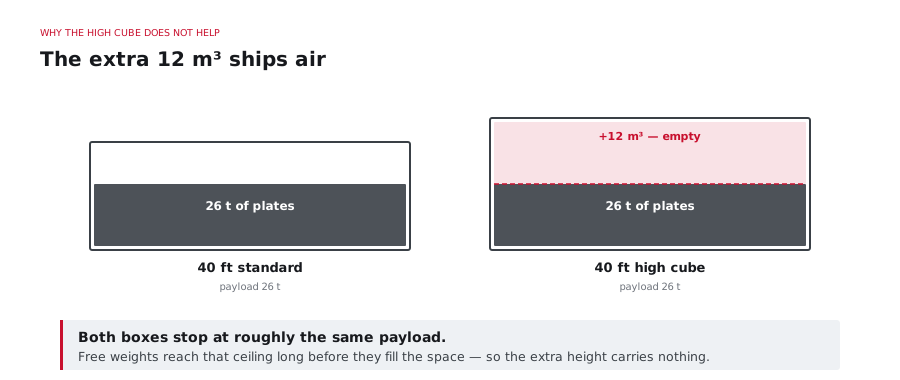
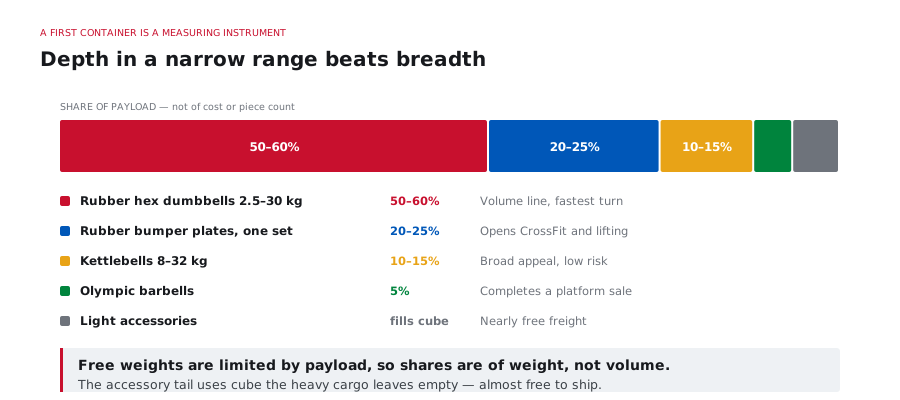
Loading a mixed container well requires knowing the actual carton dimensions and weights of everything going in it — because free weights are limited by payload rather than volume, and light goods have to be selected to fill the cube the heavy goods leave empty.
That planning is straightforward when all the figures are in one system and awkward when they arrive from five sources at different times.
Accountability
The most important difference is the least visible one. When a batch is wrong, a manufacturer can trace it to a shift and a tool. An intermediary has to ask someone else what happened, and the answer arrives filtered.
How to tell which model you are dealing with
Three questions, and they are not confrontational:
- “Which of these lines do you make yourselves?” An honest supplier answers directly. Very few make everything, and saying so is a good sign rather than a bad one.
- “Can one inspector cover the whole order in one visit?” This is the practical test, and the answer is a simple yes or no.
- “Who signs the bill of lading?” Covered in more detail in the seven questions.
Our own position, stated plainly
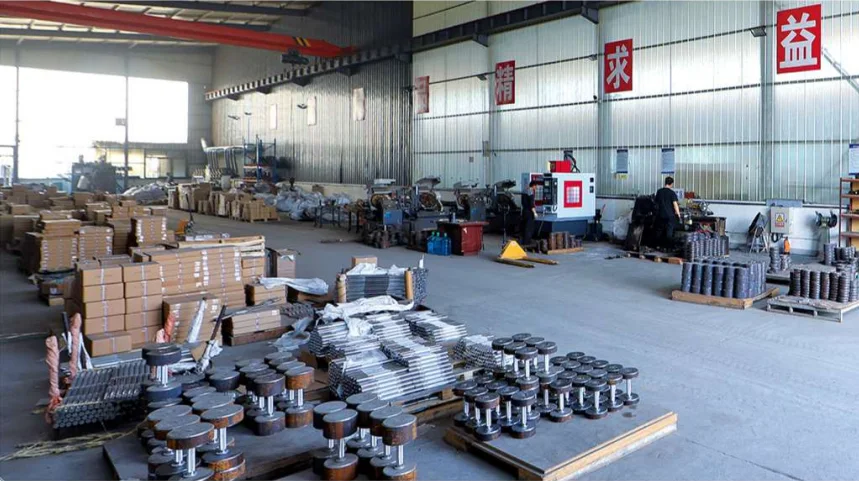
Cast iron work, coating, plating, assembly, sewing, inspection and packing all happen in our own plant. That is why a mixed container of five families ships on one bill of lading with one inspection.
What we do not do: racks, benches, cable machines or cardio. If an order needs those, it needs a second supplier, and we would rather say so at the quotation stage than discover it at loading.
Send an assortment and a destination port and we will return the loading plan — container count, remaining cube, and what could fill it — before the proforma invoice is issued.
Frequently asked
What is the advantage of a mixed container from one factory?
One production schedule, one inspection visit covering every line, one bill of lading, and one party accountable if a batch is wrong. Under consolidation from several factories, each of those is multiplied.
Is it a problem if a supplier consolidates from several factories?
Not inherently, and sometimes it is the only option. The risk is not knowing which model you are buying, because it changes inspection cost, schedule risk and who is accountable for a defect.
How does consolidation affect third-party inspection?
Either you pay for several factory visits, or you inspect at the consolidation warehouse where goods are already cartoned and only outer packaging is visible. The second is common and considerably weaker.
What should I ask to find out which model a supplier uses?
Which lines they make themselves, whether one inspector can cover the whole order in a single visit, and who signs the bill of lading. None of these is confrontational and all three have simple answers.
Which products do you not manufacture?
Racks, benches, cable machines and cardio equipment. An order requiring those needs a second supplier, and we say so at quotation stage rather than at loading.

Written by the people who quote, tool and inspect the product at our own plant. Questions: sales@ironhue.com
Request a quotation
Send the list. Get price, lead time and container loading in one working day.
Item list, quantities and destination port are enough to start. Logo artwork and colour references can follow once the price is agreed.
- Emailsales@ironhue.com
- Phone / WhatsApp / WeChat+86 138 6042 3022
- OfficeIronhue Limited
Room 1203, No.5 Jinzhong Road, Huli District, Xiamen, China